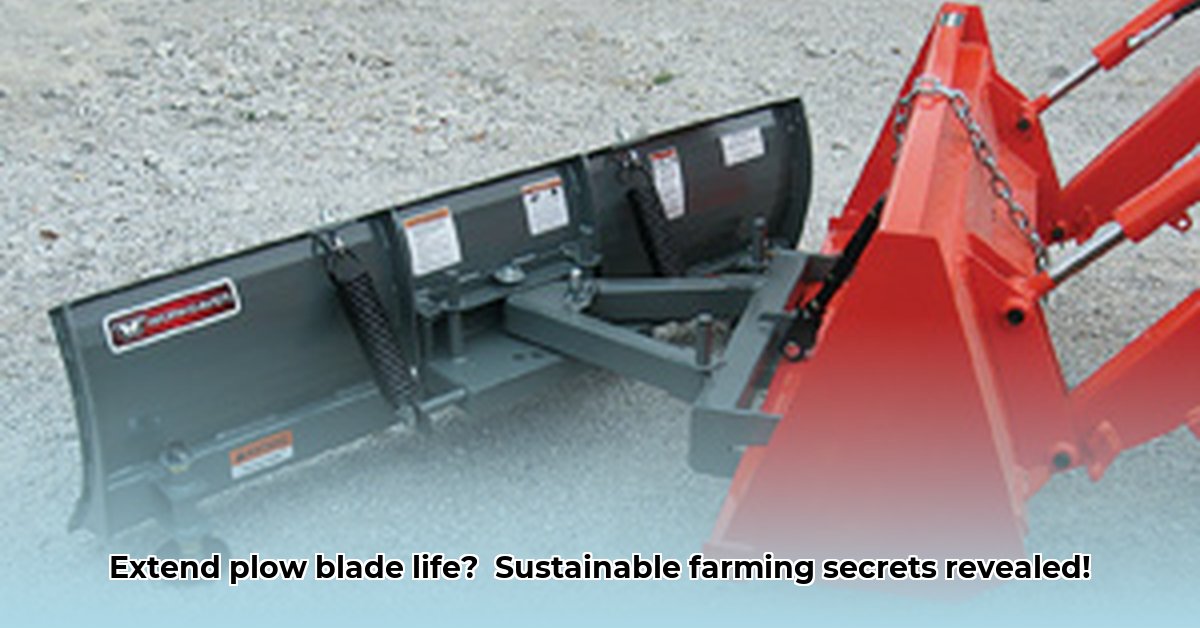
Choosing the Right Plow Blades: A Guide to Sustainable Snow Removal
Winter's icy grip on your farm doesn't have to mean a financial or environmental hit. Efficient snow removal is crucial, but it shouldn't come at the cost of your budget or the planet's health. This guide helps you choose and maintain tractor plow blades sustainably, maximizing their lifespan and minimizing your environmental impact. We'll cover blade selection, maintenance, and environmentally conscious practices to keep your farm running smoothly and responsibly. For smaller tractors, consider a single bottom plow.
Plow Blade Materials: Steel vs. Poly and Beyond
The material of your plow blade significantly impacts its lifespan and environmental footprint. Steel blades offer exceptional durability, but their production and disposal have higher environmental costs. Poly-based materials (polyurethane, polymers) often boast a smaller manufacturing footprint, but may have a shorter lifespan. The optimal choice depends on your needs and priorities.
| Blade Material | Advantages | Disadvantages | Sustainability Considerations |
|---|---|---|---|
| Steel | Extremely durable, performs well in harsh conditions | High environmental cost of production and disposal, prone to rust | Recycling is possible but energy-intensive; consider lifecycle cost |
| Poly-based | Lower initial cost, lighter weight, generally lower production impact | Potentially shorter lifespan, may not withstand extreme conditions | Evaluate recyclability and disposal options; often a better initial choice |
Ongoing research continuously develops more sustainable materials, so stay informed!
Extending Plow Blade Life: A Practical Maintenance Plan
Even the most durable plow blades require care. Following these steps significantly extends their lifespan and reduces replacement costs:
Regular Inspections: After each use, inspect blades for cracks, chips, dents, or excessive wear. Early detection prevents major problems.
Sharpening: Dull blades increase strain on both the blade and your tractor's engine. Regular sharpening is crucial. If sharpening doesn’t restore performance, consider replacement.
Proper Storage: Store blades in a dry place during the off-season to prevent rust and corrosion.
Safe Operating Practices: Avoid hitting rocks or other obstacles. This protects your blades and extends their life considerably.
Responsible Disposal: Dispose of worn blades responsibly. Check with your local waste management facility for recycling or proper disposal methods.
Sustainable Snow Removal: Beyond the Blade
Replacing blades frequently increases waste and costs. Sustainable snow removal involves more than just blade selection:
Strategic Plowing: Consider if plowing is truly necessary after every snowfall. Waiting for larger accumulations saves fuel, time, and reduces blade wear.
Efficient Techniques: Experiment with plowing patterns and speeds to find the most efficient approach, minimizing energy consumption and blade wear.
These small changes, while seemingly insignificant individually, contribute significantly to long-term cost savings and reduced environmental impact.
The Economics of Sustainable Snow Removal
While high-durability blades might have a higher initial cost, they offer long-term savings by reducing the frequency of replacements. Consider this a smart investment, balancing initial expense against long-term cost of ownership. A simple cost-benefit analysis, factoring in blade lifespan and replacement costs, can illuminate the most economically sound approach.
The Future of Sustainable Snow Removal
Research continues toward developing more eco-friendly blades. Keep an eye out for innovations in recyclable and biodegradable materials—the future of sustainable farming depends on such advancements.
3 Key Takeaways:
- Choosing durable plow blades is a significant step toward sustainable snow removal.
- Regular maintenance significantly extends the lifespan of your plow blades.
- Sustainable practices, including strategic plowing, contribute to both cost savings and reduced environmental impact.